Category: Insights

  • The Honest Case for Paid: An Advisor’s Read on Matt Slaymaker’s Ads Playbook

    The Honest Case for Paid: An Advisor’s Read on Matt Slaymaker’s Ads Playbook

    Episode Recap · Authority & Footprint

    The Honest Case for Paid: An Advisor’s Read on Matt Slaymaker’s Ads Playbook

    A paid-media operator argues for restraint — and every point maps to the judgment work of strategic SEO.

    At The SEO Advisory we read the Unscripted SEO Podcast from a strategic seat: not “which channel,” but “what should this business actually do first?” Matthew Slaymaker of Slaymaker Marketing is a paid-media operator — and the most valuable thing he said is an argument for restraint. Here’s the advisory read on his ads playbook.

    Readiness is a strategy question, not a channel question

    The instinct when growth stalls is to add a channel: turn on ads. Matt’s counter — consider turning them off — is exactly the judgment call an advisor is paid to make. If organic visitors who already trust you convert below 2–3%, paid traffic (which converts 30–50% worse) only spends faster. The lever isn’t the ad account; it’s the offer, the positioning, and the path. Fix those and every channel improves at once.

    If you’re not getting an organic conversion rate of two to three percent already, your ads probably are never gonna work.— Matthew Slaymaker
    “You might not be ready for ads yet.” — Matthew Slaymaker
    “You might not be ready for ads yet.” — Matthew Slaymaker

    Creative and targeting are the real levers

    Advisors think in levers and their weights. Matt gives us clean numbers: on Meta, creative is roughly 70% of performance, so broad targeting plus radically different angles beats fussy audience layering. On Google, targeting is still about half the game — intent decides who even sees the copy. Knowing which lever carries the weight on which platform is the difference between spending and investing.
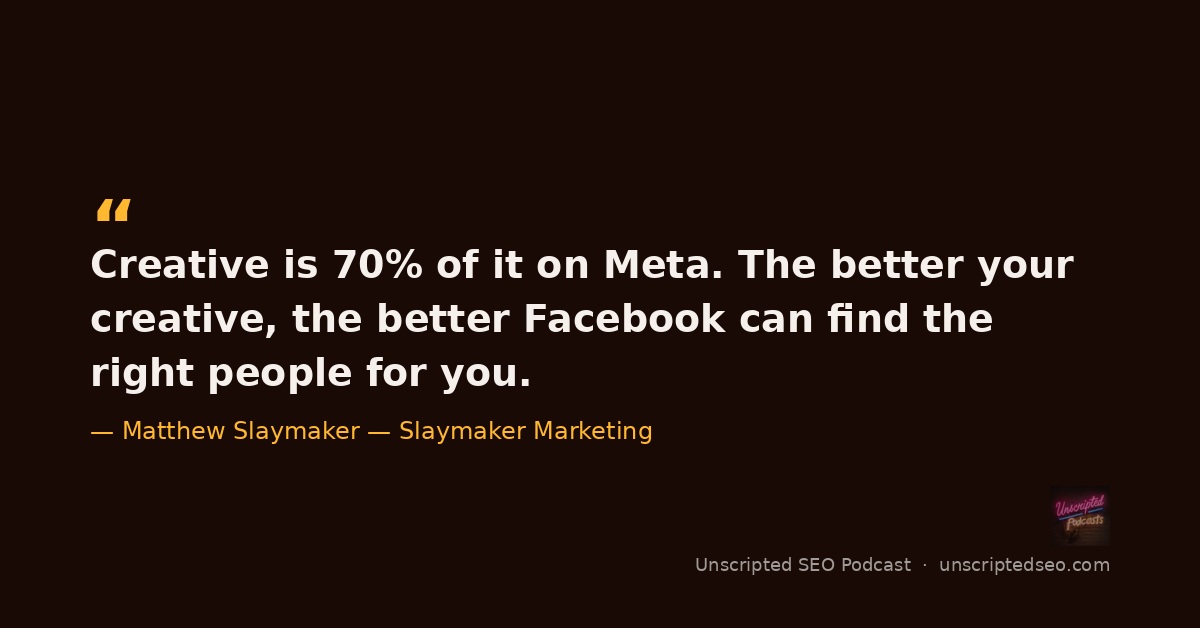
    “Creative is 60, 70% of it on Meta.” — Matthew Slaymaker
    “Creative is 60, 70% of it on Meta.” — Matthew Slaymaker

    Footprint and shown values beat claims

    The through-line that matches our own thesis — footprint beats tricks — is that authority has to be shown, not stated. Everyone claims to be sustainable, made-in-USA, cruelty-free, so the words stop meaning anything. Patagonia earned belief with real receipts; Yellow Leaf Hammocks put the weaver’s name on every hammock. In an AI-flattened SERP, demonstrated authority and genuine mentions are what a brand can defend.

    Point AI at judgment, not volume

    Finally, the agentic-age lesson we keep returning to: use AI for leverage, keep a human on judgment. Matt’s best AI use isn’t an autonomous ad bot — it’s a Claude workflow scoring team proactivity and account attention so a growing agency stays close to clients. That’s stewardship, not automation for its own sake.

    Full conversation: Matthew Slaymaker on Ads, Creative Strategy & Honest Marketing on the Unscripted SEO Podcast. Connect with Matt on LinkedIn.
    From The Episode

    This recap is drawn from Matthew Slaymaker’s conversation with Jeremy Rivera on the Unscripted SEO Podcast. Matt published his own companion take on the same exchange — read it on the Slaymaker Marketing blog.

    Authentic Brand Values: Can Marketing Ever Be Genuinely From the Heart?

    Jeremy Rivera

    There’s a push and pull of there being taglines and values that came up after my interview with the Permacast wall company. And I’ll be asking PureAire, the oxygen monitoring company I’m meeting with tomorrow: what are the values you want to bring to the market? … There’s also this kind of make-believe world of marketing where you’re saying what your company’s values are — but you’re also tap-dancing, which isn’t genuine. Can you have genuine, from-the-heart marketing? That’s kind of my question.

    Matthew Slaymaker

    You can, absolutely — but you have to show it. You can’t just say it. … Everybody’s saying ‘we’re sustainable, we’re made in USA, we’re cruelty free’ — it doesn’t make you stand out anymore. One brand that did a good job of this: Yellow Leaf Hammocks. Every hammock that’s woven has the name of the person who wove it written on it. That’s the kind of stuff that actually brings your values to life. If you just say ‘we’re charitable,’ people don’t really trust or believe you nowadays. But if you can actually show it and bring it to life for them, that’s a very different thing.

    UNSCRIPTED SEO
    You Might Not Be Ready for Ads
    Ten truths from Matt Slaymaker

    Free download

    The honest-ads field guide

    The companion eBook to the episode — ten lessons on creative, targeting, and marketing that means it. No form, no gate.
  • Rob Bonham on SEO in the Agentic Age (Episode Recap)

    Rob Bonham on SEO in the Agentic Age (Episode Recap)

    Episode Recap · SEO in the AI Era

    Rob Bonham on SEO in the Agentic Age

    My conversation on the Unscripted SEO Podcast, recapped: why SEOs are now stewards of the AI, the 100-page mistake I keep seeing, and what actually wins the SERPs.

    I recently joined Jeremy Rivera on the Unscripted SEO Podcast to talk about what two decades in SEO — local, e-commerce, SaaS, and home services — have taught me about working in the agentic age. AI now handles the low-level busywork in minutes. The catch: that moves the value of a good SEO up the stack, to judgment and knowing what not to do. Here are the ideas that mattered most.

    We are stewards of the AI

    My central framing on the show: as SEOs, we’re now stewards of the AI. The tools are genuinely powerful, but they mostly recombine what already exists on the web. Point them at scale without oversight and you’ll confidently ship pages that pull in bots, five-second bounces, and thin answers — and Google will notice the missing user signals. Per Google’s own guidance on AI content, automation used mainly to game rankings breaks its spam policies, while original, experience-led content gets rewarded.

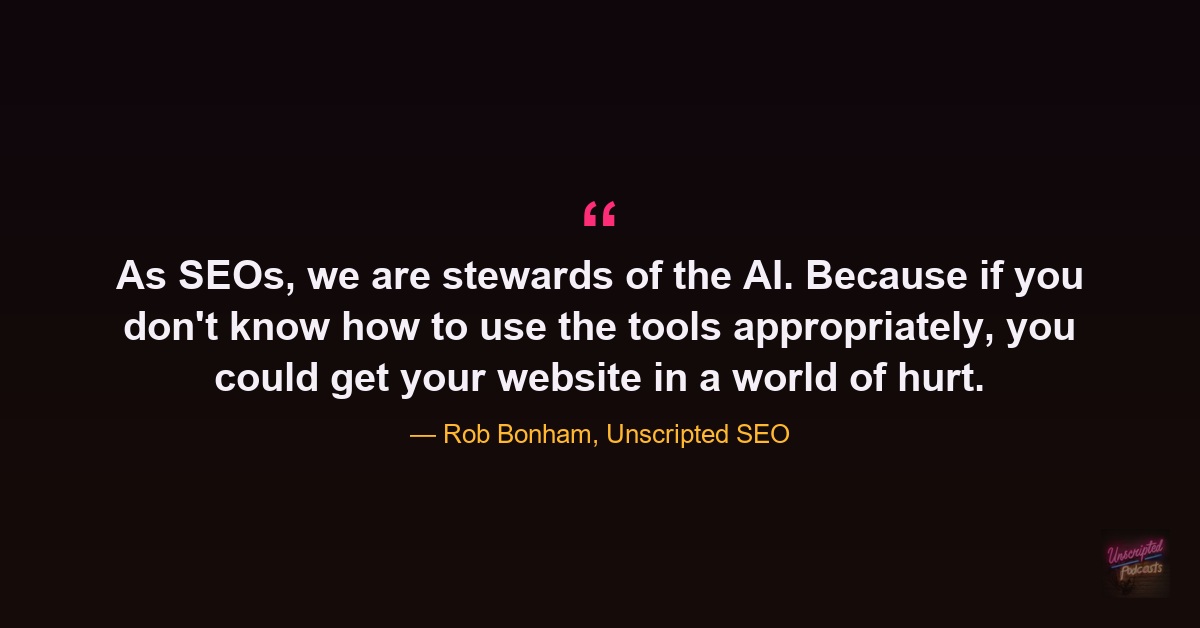
    “As SEOs, we are stewards of the AI.” — Rob Bonham
    “As SEOs, we are stewards of the AI.” — Rob Bonham

    The 100-page concrete-wall trap

    Jeremy brought the perfect real-world example: precast concrete walls florida — a company that used AI to spin up roughly a hundred near-duplicate pages — one for every city they service — each pulling random stock photos of concrete walls. The instinct was right: try to do a little more, cover more ground. But volume without information gain — no real user data, no first-hand expertise, nothing a machine couldn’t already generate — is just more of a not-great idea.

    It’s what happens when a business goes into a “fugue state” with Claude or ChatGPT and sends over 40-page documents, convinced they’ve replaced expertise with volume. From an actual expert’s seat, the notion is fine; the execution isn’t. You can’t ship it raw — but with a human setting strategy and reviewing every output, the power is absolutely there.

    Footprint wins the SERPs

    If there’s one be-all-end-all, it’s this: whoever has the bigger footprint — more people talking about them across the web in a positive way — wins. That’s brand, mentions, and genuine authority, not link tricks. If you want the systematic version, SEO Arcade’s link building & authority resource guide is a solid starting point.

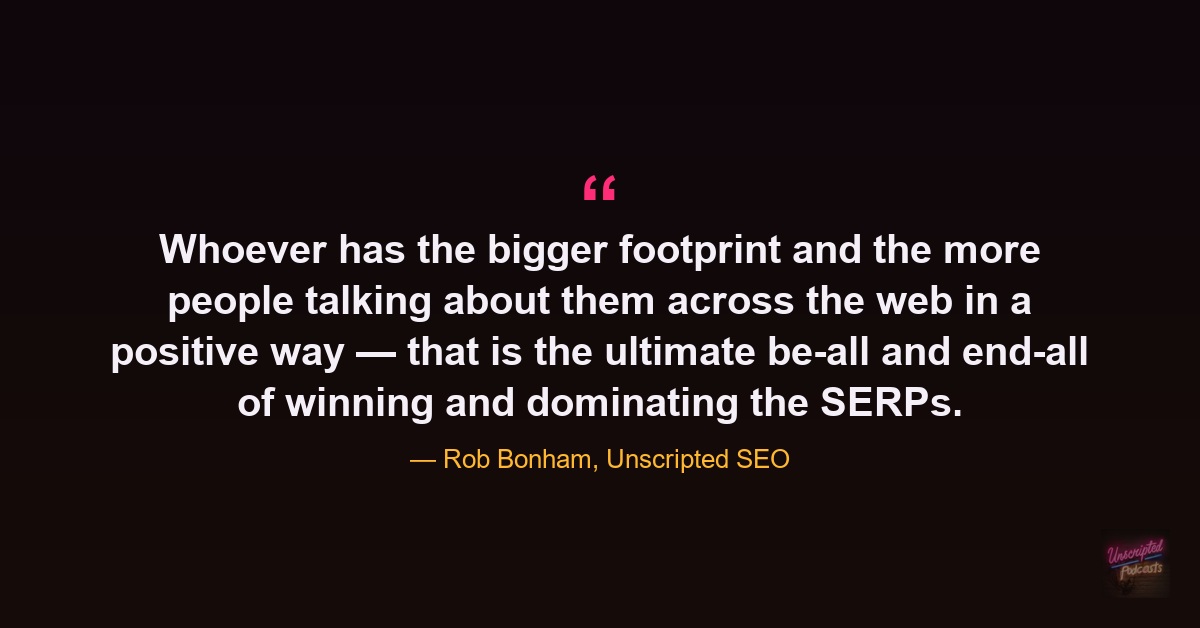
    “Whoever has the bigger footprint… wins the SERPs.” — Rob Bonham
    “Whoever has the bigger footprint… wins the SERPs.” — Rob Bonham

    Don’t sell yourself short

    We also got into the business of consulting. My advice to SEOs: don’t sell yourself short. Hourly or monthly retainer, price it so it makes sense for you and the client — a rate that lets you do the deep, judgment-heavy work is the rate that actually protects their results.

    “Don't sell yourself short.” — Rob Bonham
    “Don’t sell yourself short.” — Rob Bonham

    That’s the through-line of the whole conversation: use AI for leverage, keep a human in the loop for judgment. If you’d like that discipline built into your team, that’s what fractional SEO management is for — or start with a focused advisory engagement.

    Full conversation: Rob Bonham on SEO in the Agentic Age on the Unscripted SEO Podcast. Connect with Rob on LinkedIn, or explore more in our hub on SEO in the AI Era.
    THE SEO ADVISORY
    Get to Know Rob Bonham
    Fractional SEO Manager & SEO Advisor

    Free download

    Get to know me — in 5 minutes

    How Rob thinks about SEO in the AI era and how he works. No form, no gate.

  • Integrated Marketing: Why SEO Can’t Win Alone

    Integrated Marketing: Why SEO Can’t Win Alone

    Authority & Footprint

    Integrated Marketing: Why SEO Can’t Win Alone

    SEO in a silo underperforms. Here’s how integrated, multi-channel marketing makes every channel hold the others up.

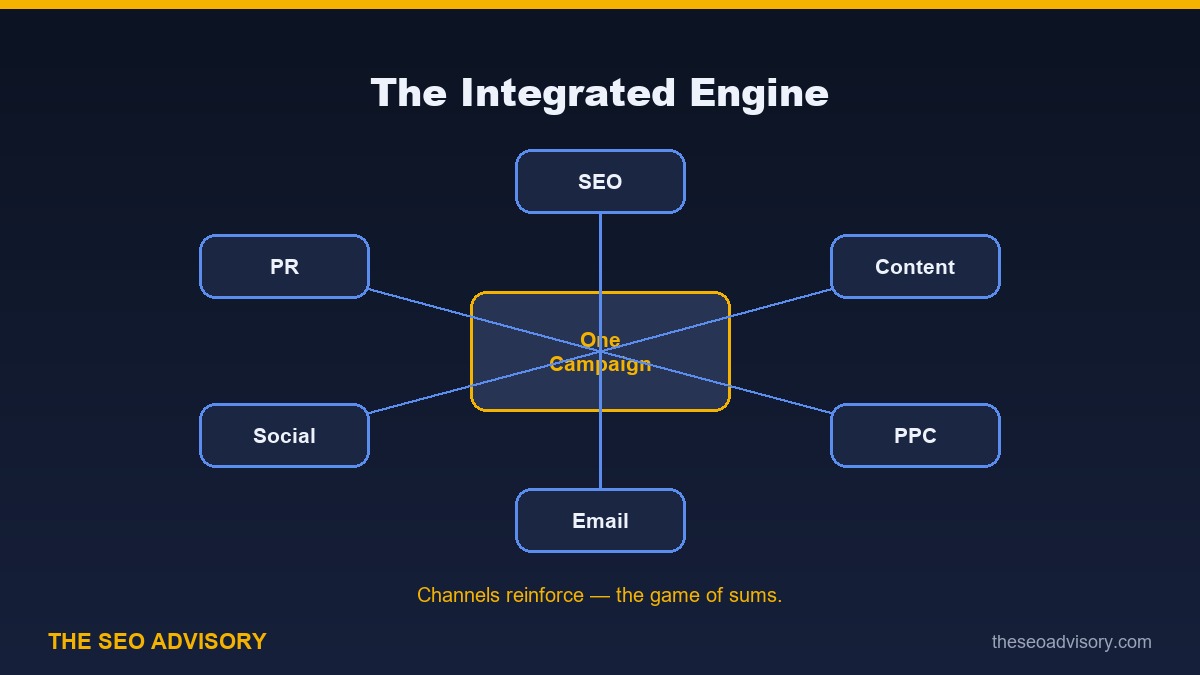
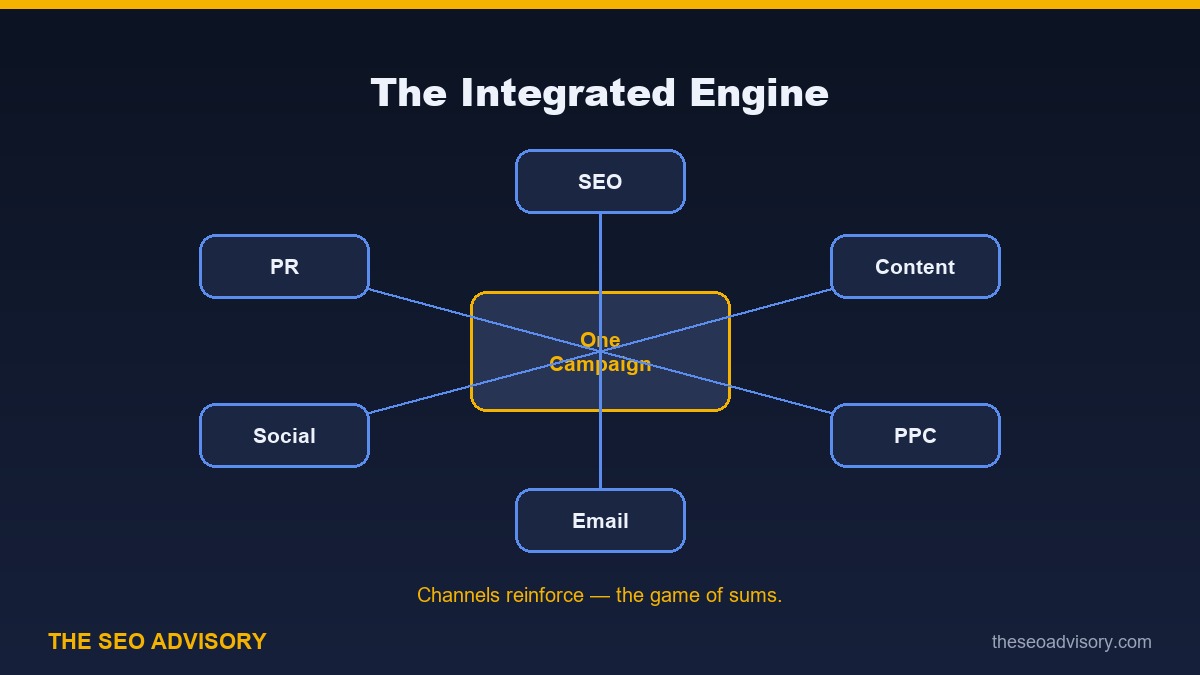
    The integrated engine: channels reinforce one campaign.
    The integrated engine: channels reinforce one campaign.

    SEO run as an island almost always underperforms. The teams that win treat it as one instrument in an integrated campaign — what Rob calls the game of sums.

    Multi-channel is the multiplier

    The numbers back it up: per Omnisend’s research, campaigns using three or more channels saw a 90% higher customer retention rate than single-channel campaigns. Channels don’t compete for budget — they compound.

    Rob Bonham on working channels together
    Rob Bonham on working channels together

    Distribution is the moat

    {}Nick Eubanks framed the why: when execution becomes infinite (and AI is making it so), distribution is the only remaining moat. Anyone can make the asset; not everyone can get it in front of the right audience across search, social, email, and PR. SEO Arcade’s content strategy resource guide helps you plan that distribution.

    Nick Eubanks on distribution as the moat
    Nick Eubanks on distribution as the moat

    The car-dealership play

    Rob’s go-to example from years running dealer campaigns: build a sales-event landing page (Black Friday, Memorial Day), then hit it from every angle — email to interested buyers, paid search and paid social, and organic social reinforcing the same message. One campaign, every channel, holding each other up.

    Make every channel hold the others up
    Make every channel hold the others up

    Orchestrating that is core to fractional SEO management — and the throughline of the Authority & Footprint hub.

    Originally explored with Nick Eubanks on the Unscripted SEO Podcast. More in our hub on Authority & Footprint.
    THE SEO ADVISORY
    Get to Know Rob Bonham
    Fractional SEO Manager & SEO Advisor

    Free download

    Get to know me — in 5 minutes

    How Rob thinks about SEO in the AI era and how he works. No form, no gate.

  • Footprint Beats Tricks: Link Building Reborn for the AI Era

    Footprint Beats Tricks: Link Building Reborn for the AI Era

    Authority & Footprint

    Footprint Beats Tricks: Link Building Reborn for the AI Era

    Forget DA and DR. Real link value comes from relevance, authority, and association — and a bigger footprint is what wins.

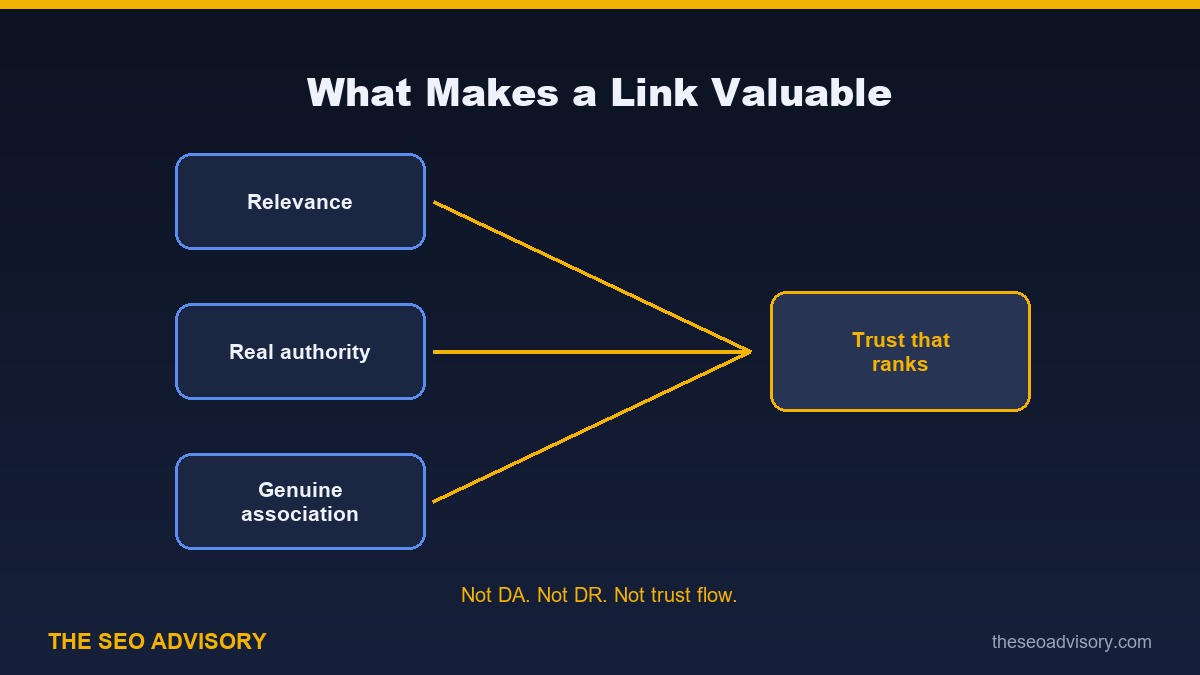
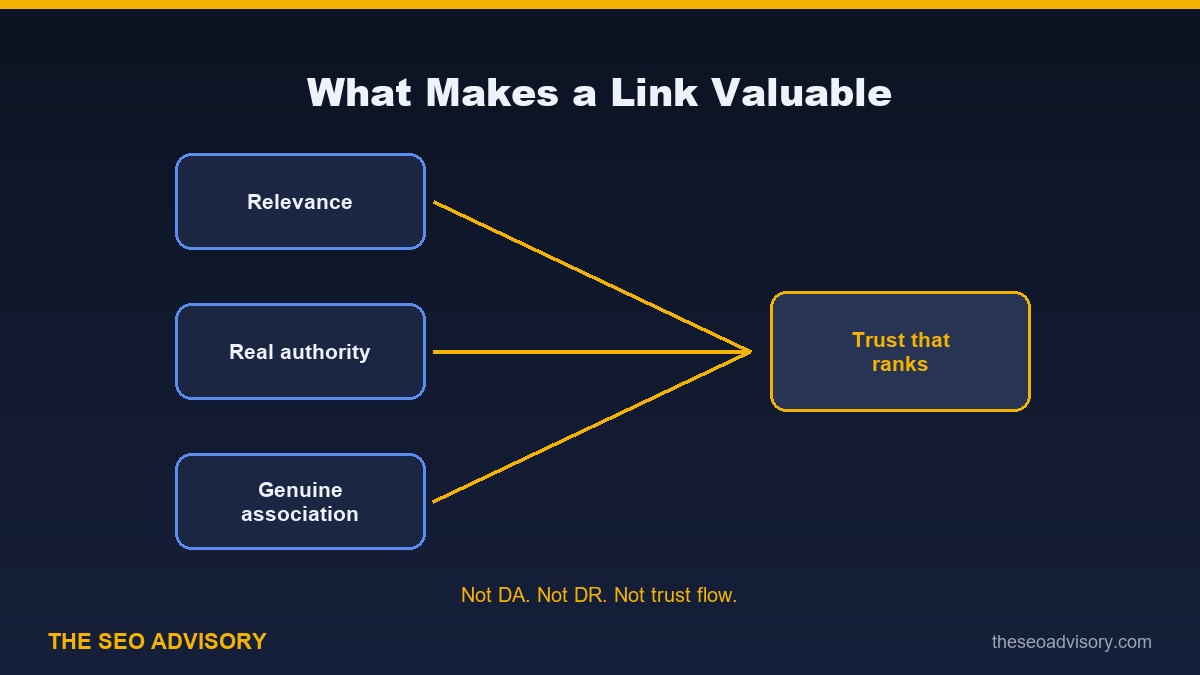
    What makes a link valuable: relevance, authority, association.
    What makes a link valuable: relevance, authority, association.

    Link building isn’t dead — it’s been reframed. The brands that win aren’t gaming a metric; they have a bigger footprint and more people talking about them across the web.

    Links still matter (the real ones)

    The data is clear that links remain a core trust signal: Backlinko’s analysis of 11.8 million results found the #1 result has, on average, 3.8× more backlinks than positions 2–10 — with the diversity of referring domains mattering most. It’s not volume; it’s breadth and quality.

    Rob Bonham on footprint
    Rob Bonham on footprint

    Stop pushing metrics

    {}Bradley Benner said it bluntly on the podcast: it’s not some third-party metric like DA or DR that decides whether a link is valuable — it’s relevance and genuine association. Our job is to build and strengthen those associations, not chase a number. SEO Arcade’s link building & authority guide is the deep dive.

    Bradley Benner on link metrics
    Bradley Benner on link metrics

    The easiest links you’re not asking for

    Rob’s favorite example is “shooting fish in a barrel”: at an e-commerce parts provider, the brands they carried all had “where to buy” pages — so they simply earned links from their own suppliers and partners. No outreach grind, no payment, just relationships that already existed. Most businesses leave that footprint on the table.

    Footprint beats tricks
    Footprint beats tricks

    Building an authority program is a core part of fractional SEO management. See the bigger picture in the Authority & Footprint hub.

    Originally explored with Bradley Benner on the Unscripted SEO Podcast. More in our hub on Authority & Footprint.
    THE SEO ADVISORY
    Get to Know Rob Bonham
    Fractional SEO Manager & SEO Advisor

    Free download

    Get to know me — in 5 minutes

    How Rob thinks about SEO in the AI era and how he works. No form, no gate.

  • Why Publishing 100 AI Pages Will Tank Your Rankings

    Why Publishing 100 AI Pages Will Tank Your Rankings

    SEO in the AI Era

    Why Publishing 100 AI Pages Will Tank Your Rankings

    Spinning up content at volume feels productive. Here’s why thin, scaled pages quietly wreck the signals that actually rank you.

    The volume trap: thin pages weaken signals until rankings dive.
    The volume trap: thin pages weaken signals until rankings dive.

    It’s the most tempting button in modern SEO: generate a hundred pages in an afternoon. The output looks like progress. The results, a few months later, rarely are.

    Volume is not a strategy

    When you flood a site with thin, near-duplicate pages, the user signals aren’t there — high bounces, no engagement, no conversions — and Google devalues the content accordingly. It can even cross a line: Google’s scaled content abuse policy specifically targets generating many pages (including with AI) primarily to manipulate rankings rather than help people.

    Rob Bonham on publishing at volume
    Rob Bonham on publishing at volume

    Updates only hurt the incomplete

    {}Ernesto Ortiz framed it perfectly on the podcast: algorithm updates just turn the dials on which factors matter, and if you drop, it’s usually because you were incomplete — you optimized for the things that don’t. Volume papers over incompleteness; it never fixes it. Build fewer, genuinely complete pages instead. SEO Arcade’s content strategy resource guide is a solid blueprint.

    Ernesto Ortiz on incomplete content
    Ernesto Ortiz on incomplete content

    The agency cautionary tale

    Rob has watched this play out from inside agencies: a client drops the retainer, has the in-house team publish 50–100 AI pages a month, and looks like a hero — for a few months. Then the site tanks, and they start looking at everyone sideways. The fix isn’t more pages; it’s the judgment to ship the right ones.

    Thin pages tank ranking signals
    Thin pages tank ranking signals

    If you want a senior eye on what to publish (and what to kill), that’s the heart of fractional SEO management, and the opposite philosophy to the one explored in our AI-era hub.

    Originally explored with Ernesto Ortiz on the Unscripted SEO Podcast. More in our hub on SEO in the AI Era.
    THE SEO ADVISORY
    Get to Know Rob Bonham
    Fractional SEO Manager & SEO Advisor

    Free download

    Get to know me — in 5 minutes

    How Rob thinks about SEO in the AI era and how he works. No form, no gate.

  • Stewards of the AI: Using AI in SEO Without Wrecking Your Site

    Stewards of the AI: Using AI in SEO Without Wrecking Your Site

    SEO in the AI Era

    Stewards of the AI: Using AI in SEO Without Wrecking Your Site

    AI can do an SEO’s busywork in minutes. Using it well still takes judgment — here’s how to get the leverage without the rankings risk.

    The AI stewardship loop: humans set strategy, AI executes, humans review.
    The AI stewardship loop: humans set strategy, AI executes, humans review.

    The low-level work that used to fill an SEO’s month — title tags, meta descriptions, on-page fixes — is now a few minutes of prompting. That’s a genuine unlock. It’s also a trap. The value of a good SEO has moved up the stack, from doing the work to exercising the judgment about which work is worth doing.

    You’re the driver, not the passenger

    Rob Bonham’s framing is simple: we are stewards of the AI. AI mostly recombines what already exists, so without human oversight it confidently produces pages that pull in bots, five-second bounces, and thin “answers” that erode trust. Google has been explicit about this — per Google’s guidance on AI content, using automation primarily to manipulate rankings violates its spam policies, while original, people-first content that demonstrates real experience and expertise is rewarded.

    Rob Bonham on AI stewardship
    Rob Bonham on AI stewardship

    AI search is not SEO 2.0

    On the Unscripted SEO Podcast, {}Brittany Trafis put a finer point on it: treating AI search like a fresh coat of paint on keyword-and-rank SEO is how you stay invisible. The fundamentals carry over, but the execution — structured, sourced, genuinely helpful content — has to be deliberate. For the deeper playbook, see SEO Arcade’s entity, brand authority & AI-visibility guide.

    Brittany Trafis on AI search
    Brittany Trafis on AI search

    A quick gut check from the field

    Rob’s favorite example: you could spin up a hundred city-specific pages for a concrete-pouring business. Should you? Probably not. Each one would be a near-duplicate with no real user data, no first-hand expertise, nothing a machine couldn’t already generate. The right move is to use AI to execute a human-set strategy — then review every output before it ships.

    Judgment is still the job
    Judgment is still the job

    That’s the whole discipline: brief with strategy, let AI draft at scale, and keep a human in the loop to correct it. Want help building that workflow into your team? That’s exactly what fractional SEO management is for — or start with a focused advisory engagement.

    Originally explored with Brittany Trafis on the Unscripted SEO Podcast. More in our hub on SEO in the AI Era.
    THE SEO ADVISORY
    Get to Know Rob Bonham
    Fractional SEO Manager & SEO Advisor

    Free download

    Get to know me — in 5 minutes

    How Rob thinks about SEO in the AI era and how he works. No form, no gate.